


- Legrand
- About Us
- White Papers
- Products
- Menu Products
-
- Case Studies
- News
- Training
- Export
- Policies
- Vacancies

Digitally Transforming Stoke-on-Trent’s Telecare and Lifeline Service
Background
Stoke-on-Trent Council (City of Stoke-on- Trent) has a mission for 2024-2028, to evolve and develop key priorities as part of its new corporate strategy ‘Our City, Our Wellbeing’ to improve the wellbeing of their residents. Their previous strategic plan included a Digital Strategy where the city council set an ambition to enhance how it uses digital technologies in providing services to Stoke-on-Trent’s residents, businesses, customers and partners by 2024.

Additional Details
With over 15 percent of its population aged 65 or over and 133 adult social care homes and agencies, Stoke-on-Trent City Council had a commitment to enhance its social care services with technology by 2024 as a part of the digital strategy. Previously, the council used analogue systems to deliver its telecare services, this not only impeded the speed of delivery as needs continued to grow and become more complex, but also restricted the city from taking advantage of any new breakthroughs in telecare technology.
Download Case Study

Background
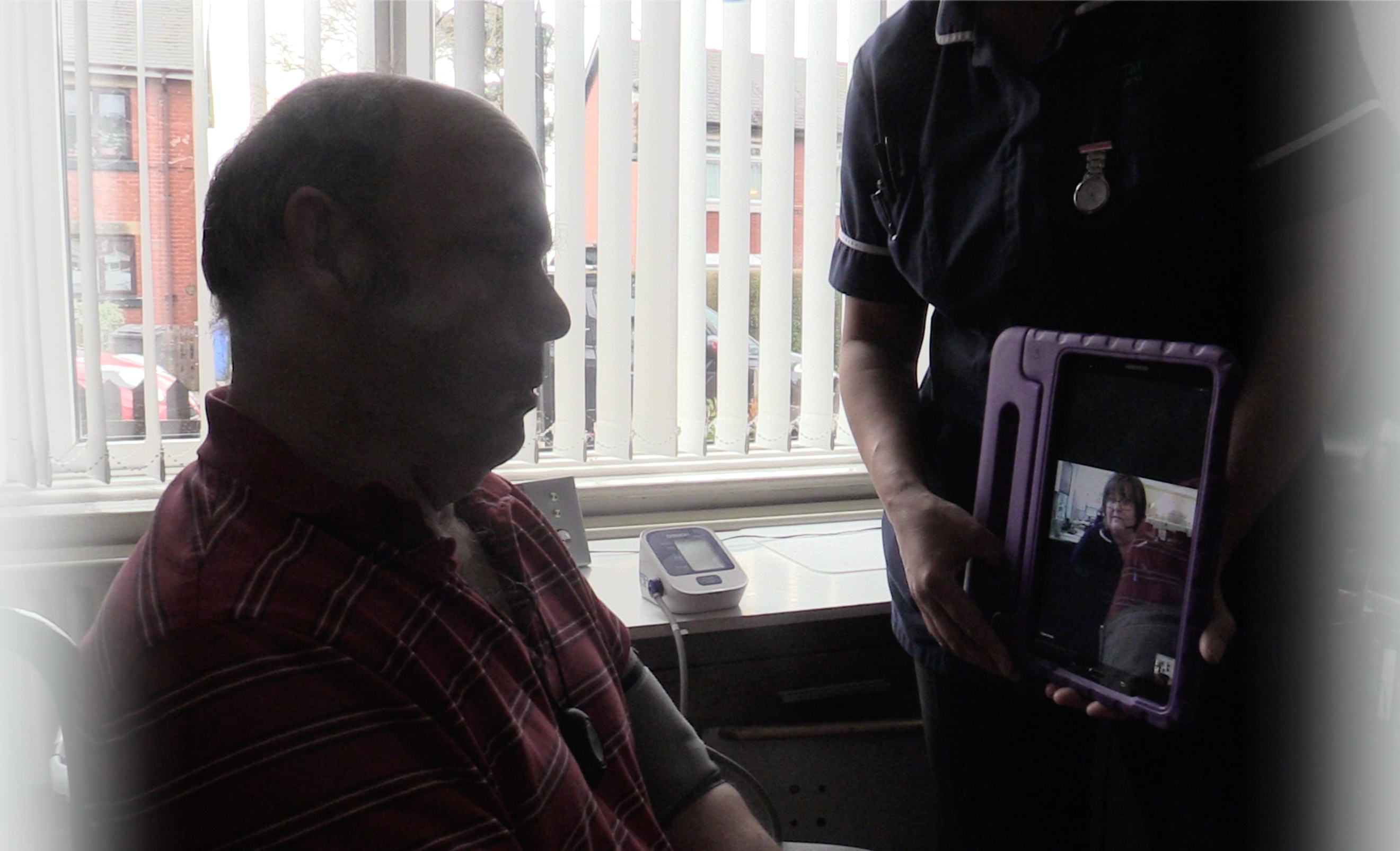
Tameside’s community response service is the first of its kind, at it’s heart is the way it integrates technology into all of its practices. The service has been designed to work around the client needs to give them the right care, from the right provider, in the right location in an efficient and timely manner.
The service aim is to empower clients and assist them to live as independently as possible with the assistance of digital technology, healthcare providers and community services within their own home rather than a clinical environment wherever possible.
Challenges
One of the biggest challenges the service has come against so far is changing the attitudes of what traditional methods for caring for clients in the community looks like. We are introducing new communication methods and new digital technologies into the service and the service user’s homes.
This is a vast change of mind-set to move away from traditional methods of care and the number of organisations involved takes a great deal of coordination and this is itself can provide its own set of challenges.
Download Case Study
Innovative integration of Reach GSM Unit keeps Dawn in her own home
Background
Although 47-year-old Dawn has progressive non-remitting multiple sclerosis, she is determined to remain living in her own home for as long as possible. A substantive Telecare package has empowered her to do so for the last eight years, but an innovative solution was required to enable her continued independence.
Dawn is still able to verbally communicate, however she has no independent mobility of motor movement. This requires her to have a method of summoning help in the event of an emergency when she is alone. Dawn lives alone and there are times during the day, and particularly at night, when she is alone for long periods of time in between visits from a carer.
Additional Details
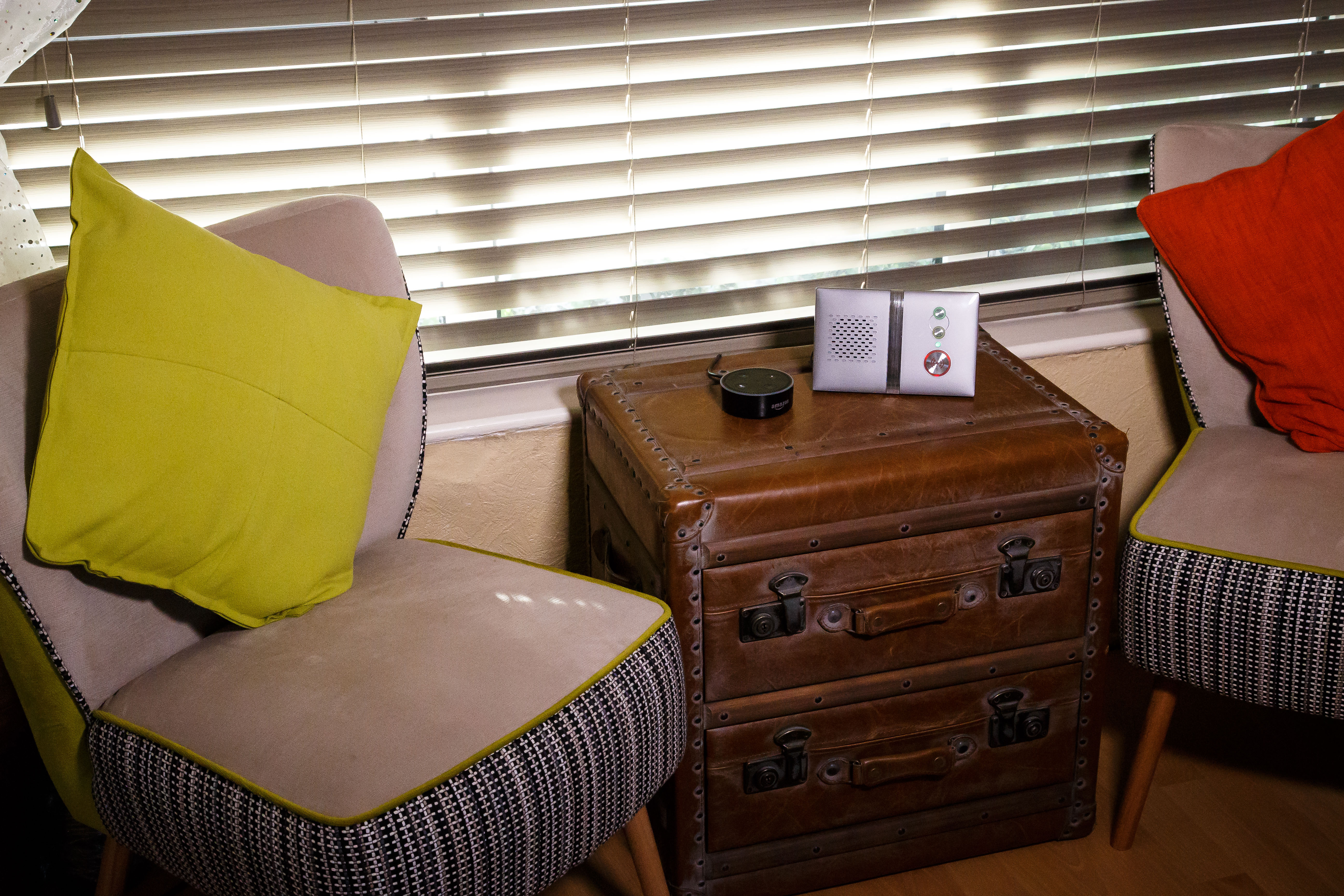
Wigan Council and Eldercare came up with the innovative solution to combine a Tynetec Reach Plus GSM At-Home Alarm Unit with the Amazon Echo in order to support Dawn’s increasing needs.
If Dawn should require help when she is alone, she is now able to ask the Alexa Voice Service on her Amazon Echo to call for help, which prompts Alexa to send a text message to the Reach Plus GSM, instructing the unit to dial an Alarm Receiving Centre.
The Reach GSM is Tynetec’s At-Home Alarm Unit for communication over mobile networks, which negates the requirement of a fixed telephone line and enables the monitoring of daily activities.

Lauren gets her life back with a Reach At Home Alarm Unit and Fall Detector
Background
At only 20 years old, Lauren has an acquired brain injury and suffers from short term memory loss and hemiplegia. For Lauren’s family - who feared leaving her home alone for any period of time - the Tynetec Reach Home Alarm Unit, Wrist Worn Fall Detector and Smoke Alarm provide a huge amount of re-assurance.
Lauren was knocked down by a car at the age of 11 and spent 6 months in hospital after being left with an acquired brain injury, broken hip, broken right leg and fractured left arm.
Additional Details
Lauren’s recovery is ongoing after she re-learned how to breath, eat, walk and talk. She still struggles with her balance and using the right hand side of her body, but Tynetec products have enabled her to be more independent in her own surroundings with the knowledge that someone is always there if she needs help.
Pill Dispenser remembers Brian's medications so he doesn't have to
Background
Brian's 15 year battle with ill-health is managed by medication, which at 56, he was regularly forgetting to take.
As Brian’s wife faced the possibility that she may have to give up work to care for her husband full time, they decided to try the Tynetec Pill Dispenser, Reach Home Alarm Unit and Personal Pendant. The Pill Dispenser now manages Brian’s medication requirements on a daily basis and help is just a click away with his Personal Pendant.
Additional Details
Once pre-loaded with medication, the Pill Dispenser beeps when it’s time for Brian to take his medication and if he misses a dose, the monitoring centre will be alerted to check that he’s not in any danger.
Having Tynetec products to monitor Brian takes a lot of weight of his wife’s shoulders and she can continue to work with the reassurance that he always has help at hand.

Kimberly’s severe condition is safely managed with an Epilepsy Detector
Background
27-year-old Kimberly's parents were using a baby monitor to cope with her diagnosis of learning disabilities and severe epilepsy, until a Tynetec Epilepsy Detector, Reach Home Alarm Unit and Personal Pendant revolutionised their daughters care.
Kimberly’s parents now feel that she is safe enough to be left in the house alone, and they can pop to the shops or go to work with the knowledge she has instant support, should she need it.
Additional Details
Kimberly’s frequent seizures ensure she requires constant care and supervision, which is provided by her Personal Pendant that she can press to get help quickly.
A highly sensitive epilepsy sensor is also placed under Kimberly’s mattress to analyse the frequency of her movement and activate an alarm when it’s appropriate.


